
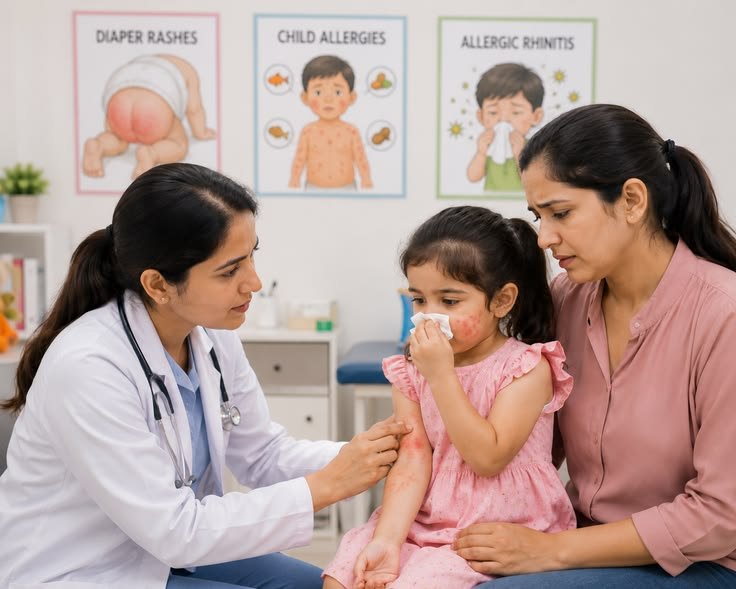
Sneezing, coughing, itchy eyes, skin rashes, stomach discomfort, and wheezing are common symptoms in children. In many cases, these symptoms are caused by a temporary infection or irritation. However, when they repeatedly occur after exposure to a particular food, substance, animal, or environment, an allergy may be responsible.
Childhood allergies can affect the skin, nose, eyes, lungs, digestive system, or several parts of the body at the same time. Common allergic conditions in children include seasonal allergies, allergic rhinitis, eczema, food allergies, and allergy-related asthma symptoms.
Some allergic reactions are mild and manageable, while others can become severe very quickly. An accurate diagnosis helps families manage symptoms safely while avoiding unnecessary restrictions on food, school, sports, travel, and everyday activities.
What Is an Allergy?
An allergy occurs when the immune system reacts abnormally to a substance that is harmless to most people. The substance that causes the reaction is known as an allergen.
When a child is exposed to an allergen, the immune system may release chemicals such as histamine. These chemicals can produce itching, swelling, redness, sneezing, coughing, wheezing, digestive symptoms, or other signs of an allergic reaction.
Allergies can develop at different ages. A child’s symptoms and the severity of reactions may also change over time.
Common Types of Childhood Allergies
Seasonal and Environmental Allergies
Seasonal and environmental allergies can be triggered by substances in the air or indoor environment, including:
- Pollen
- House dust mites
- Mold
- Animal dander
- Cockroach particles
- Dust
- Certain indoor irritants
Common symptoms include repeated sneezing, a blocked or runny nose, an itchy nose or throat, coughing, watery or itchy eyes, tiredness, and difficulty sleeping.
Allergic rhinitis may occur during certain seasons or throughout the year, depending on the trigger. Environmental allergy symptoms can also be confused with repeated colds.
Food Allergies
A food allergy occurs when the immune system reacts to a particular food protein. Common food allergens include:
- Cow’s milk
- Eggs
- Peanuts
- Tree nuts
- Wheat
- Soy
- Fish
- Shellfish
- Sesame
Food allergy symptoms can affect the skin, digestive system, breathing, or circulation. They may include hives, itching, facial swelling, vomiting, abdominal pain, diarrhea, coughing, wheezing, throat tightness, dizziness, or difficulty breathing.
Symptoms often begin within minutes to a few hours after the food is eaten, although the timing depends on the type of allergic reaction. Food allergies can occasionally cause a severe, life-threatening reaction known as anaphylaxis.
Eczema and Skin Allergies
Eczema, also called atopic dermatitis, is a condition that causes dry, itchy, inflamed, cracked, or thickened skin.
In babies, eczema often affects the face and scalp. In older children, it may appear around the elbows, knees, hands, ankles, or skin folds.
Heat, sweating, dry air, fragranced products, rough fabrics, and certain irritants may worsen the symptoms. Although children with eczema may also have food allergies, eczema is not always caused by food.
Removing several foods from a child’s diet without a confirmed diagnosis may lead to unnecessary restrictions and nutritional difficulties.
Allergy-Related Asthma Symptoms
Allergens can contribute to asthma symptoms in some children. These may include:
- Recurrent coughing
- Wheezing
- Shortness of breath
- Chest tightness
- Coughing during exercise
- Coughing at night
- Breathing difficulty after exposure to dust, pets, pollen, or mold
A persistent cough does not automatically mean that a child has asthma. Respiratory infections, reflux, environmental irritants, and other conditions may produce similar symptoms.
A pediatric or respiratory assessment may be needed to determine the cause.
Insect-Sting and Medication Allergies
Some children may experience allergic reactions after an insect sting or after taking a medication.
A medication side effect is not always the same as a medication allergy. For example, nausea or diarrhea can occur as a non-allergic side effect of some medicines.
Parents should record the name of the medicine, the dose, the timing of the reaction, and the symptoms, and then discuss them with a doctor. A child should not be permanently labelled as allergic to a medicine without appropriate medical evaluation.
Why Allergy Symptoms May Be Noticeable in Dubai
Families living in Dubai may move frequently between hot outdoor environments and air-conditioned indoor spaces. Children may also encounter dust, pollen, indoor dust mites, mold, animal dander, fragrances, cleaning products, and other possible irritants or allergens.
Air conditioning itself does not necessarily cause an allergy, but poorly maintained filters, indoor dust, or mold can contribute to symptoms in sensitive children.
Not every child reacts to the same exposure. Identifying a consistent pattern between the environment and the symptoms is more helpful than removing multiple household items without medical advice.
How Can You Tell the Difference Between a Cold and an Allergy?
Colds and allergies may both cause sneezing, coughing, congestion, and a runny nose.
A cold is caused by a viral infection and may be accompanied by fever, tiredness, a sore throat, body aches, or thicker nasal discharge. Symptoms usually improve as the infection resolves.
Allergies are more likely to cause itching of the eyes, nose, or throat, repeated sneezing, clear nasal discharge, and symptoms that return after exposure to a particular environment or trigger. They may last for weeks or continue throughout a particular season.
However, a child can have an infection and an allergy at the same time. Persistent, severe, or frequently recurring symptoms should be assessed by a doctor.
How Are Childhood Allergies Diagnosed?
Diagnosis begins with a detailed allergy-focused medical history.
The doctor may ask:
- What symptoms the child experiences
- When the symptoms first started
- How quickly they appear
- Whether they occur after eating a specific food
- Whether they appear at home, school, or outdoors
- Whether the child has eczema or asthma
- Which medications have been used
- Whether family members have allergic conditions
- Whether avoiding a suspected trigger improves the symptoms
Parents may be asked to keep a diary recording foods, activities, environments, medications, and the timing of symptoms.
Depending on the history, testing may include a skin-prick test, a blood test for allergen-specific antibodies, breathing tests, or a medically supervised food challenge.
Skin and blood test results must be interpreted alongside the child’s actual symptoms. A positive test alone does not always prove that the allergen causes a clinical reaction.
Why Random Allergy Testing Can Be Misleading
Large allergy-testing panels may produce positive results for substances that have never caused the child symptoms.
This can lead families to remove healthy foods unnecessarily, restrict the child’s activities, or believe the child has multiple allergies without sufficient evidence.
Allergy tests should be selected based on the child’s medical history and suspected triggers. Food elimination should be supervised, particularly when major food groups are involved.
A supervised oral food challenge may sometimes be used by an allergy specialist when the medical history and previous test results do not provide a clear answer.
Treatment Options for Childhood Allergies
Treatment depends on the type of allergy, the child’s age, symptom severity, and risk of a serious reaction.
Avoiding Confirmed Allergens
Avoidance is important when a specific allergen has been confirmed.
For a food allergy, this may involve:
- Reading food labels carefully
- Preventing cross-contact between foods
- Informing relatives and caregivers
- Preparing safe meals
- Informing the school or nursery
- Checking ingredients when eating outside the home
Avoiding a food without a confirmed diagnosis is not recommended, especially when the food is an important source of protein, calories, calcium, or other nutrients.
Allergy Medication
Depending on the condition, a doctor may recommend:
- Antihistamines
- Nasal sprays
- Eye drops
- Medicated creams or ointments
- Asthma inhalers
- Other condition-specific treatments
Parents should use medication according to the recommended dose for the child’s age and weight. A child should not use another person’s prescription.
Managing Eczema
Eczema care may include regular moisturization, short lukewarm baths, gentle fragrance-free products, avoiding known irritants, and using prescribed anti-inflammatory treatment during flare-ups.
Consistent daily skin care helps protect the skin barrier and may reduce the frequency of flare-ups.
Allergy Immunotherapy
For selected environmental allergies, an allergy specialist may discuss immunotherapy. This treatment gradually exposes the immune system to controlled amounts of an allergen.
Immunotherapy is not appropriate for every child or every allergy. The decision depends on the trigger, the child’s age and health, symptom severity, and response to other treatments.
What Is Anaphylaxis?
Anaphylaxis is a serious allergic reaction that can develop rapidly and affect breathing, circulation, or several body systems.
Possible warning signs include:
- Difficulty breathing
- Noisy breathing or severe wheezing
- Swelling of the tongue or throat
- Difficulty speaking or swallowing
- Sudden persistent coughing
- Pale or bluish skin
- Dizziness, confusion, or collapse
- A child becoming unusually floppy or unresponsive
- Symptoms affecting more than one part of the body after allergen exposure
Anaphylaxis is a medical emergency. When a child has been prescribed an adrenaline or epinephrine auto-injector, it should be used immediately according to the child’s emergency plan, followed by urgent emergency medical assistance.
Do not wait to see whether severe breathing or circulation symptoms improve on their own.
Managing Allergies at School or Nursery
Parents should inform the school or nursery about any confirmed allergy, particularly when the child is at risk of a severe reaction.
A written allergy action plan should include:
- The child’s confirmed allergens
- Typical symptoms
- Emergency warning signs
- Medication instructions
- The location of emergency medication
- Emergency contact details
- When emergency medical help should be requested
Teachers, caregivers, and other relevant staff should know how to recognize the child’s symptoms and follow the emergency plan.
When Should Your Child See an Allergy Specialist?
Arrange a medical assessment when your child experiences:
- Repeated unexplained hives or swelling
- Symptoms after eating a specific food
- Recurrent wheezing or breathing difficulty
- Persistent nasal allergy symptoms
- Eczema that is severe or difficult to control
- A suspected reaction to medication
- Repeated vomiting or abdominal symptoms linked to food
- Symptoms that affect sleep, school, or physical activity
- Several suspected allergies
- Any previous severe allergic reaction
An allergy specialist can help identify the true trigger, distinguish allergy from other conditions, interpret test results, and develop an individualized treatment plan.
Book a Childhood Allergy Consultation in Dubai
Childhood allergies can affect sleep, nutrition, school attendance, sports, social activities, and family life. With an accurate diagnosis and appropriate management plan, many children can continue participating safely in normal everyday activities.
Contact Clinica Sabah Specialty Hospital to arrange a pediatric or allergy consultation in Dubai. Our medical team can assess your child’s symptoms, recommend appropriate testing when needed, and develop a personalized management plan.
This article provides general educational information and does not replace professional medical diagnosis, emergency care, or an individualized treatment plan.

